

What’s the Catch? A Deep Dive into Flat-Fee vs. 1% Commission Models in Atlanta
When you’re preparing to sell your home in Atlanta, the numbers are staggering. The equity you’ve built, the closing costs, and, of course, the real estate commission. So, when you see an advertisement for a flat-fee listing or a rock-bottom 1% commission, it’s natural to pause and ask the most important question: “What’s the catch?”

Home sellers in the competitive Atlanta market are constantly seeing new, low-cost ways to sell their homes, creating a landscape of confusion and uncertainty. It’s tempting to jump at what seems like a massive savings, but is it too good to be true?
I’m Bonnie Erickson, and with years of experience navigating the complexities of the Atlanta real estate market, I believe in empowering sellers with clear, honest information. At bonnieerickson.net, our philosophy is that an informed client is a successful client. This guide is designed to pull back the curtain on these commission models so you can make the best financial decision for your family. Let’s dive deep into the flat-fee and 1% commission models to uncover the real costs, the potential pitfalls, and what you truly get—or give up—for that lower price.
Key Takeaways
- Low-commission models like Flat-Fee and 1% are not “all-inclusive.” They often feature limited services, à la carte pricing, or hidden costs that add up.
- The advertised 1% commission typically only covers the listing agent’s fee. You are still responsible for offering a competitive commission to the buyer’s agent, which is usually 2.5-3% in the Atlanta market.
- The biggest “catch” is often a significant gap in critical services like professional marketing, expert negotiation, and dedicated, hands-on support, which can lead to a lower final sale price.
- In a dynamic market like Atlanta, expert guidance can net you more money, even with a traditional commission structure, by maximizing your home’s sale price and skillfully navigating complex offers.
- The most important metric for any seller is their net proceeds—the actual money you walk away with after all costs are paid, not just the commission percentage.
TL;DR
Flat-fee and 1% commission models in Atlanta often involve significant trade-offs in service, marketing, and negotiation expertise. The advertised low rate usually doesn’t include the buyer’s agent commission (2.5-3%), and the lack of comprehensive support can result in a lower sale price, ultimately costing you more than you saved. The “catch” is that you risk leaving significant money on the table in exchange for a lower upfront fee.
The Real Estate Commission Landscape: Why Are These Models Popping Up?
The traditional real estate model has been the standard for decades, but the industry is evolving. The rise of technology has automated certain aspects of the home selling process, from online listings to digital paperwork. This technological shift, combined with a natural consumer desire to save money on one of life’s biggest transactions, has created an opening for alternative commission structures.
These models were created to meet that demand for lower costs. While many sellers begin their journey by exploring lists of discount real estate brokers, it’s crucial to understand the fundamental differences in what you are actually paying for.
Deconstructing the Models: What Do These Terms Actually Mean?
To make an informed decision, you first need to understand the language. Let’s break down the three primary commission structures you’ll encounter in the Atlanta market.
The Flat-Fee Model: The “À La Carte” Approach
- Definition: A model where a seller pays a fixed, upfront price for a specific package of services, regardless of the home’s final sale price.
- How it Works: Services are typically offered in tiers. A basic package might only get your home listed on the Multiple Listing Service (MLS) and FMLS (First Multiple Listing Service) in Georgia. More expensive tiers might add a lockbox, yard sign, or a limited number of photos. Anything beyond the package—like contract assistance or negotiation advice—often costs extra.
- The Analogy: Think of it like a budget airline. The base ticket price is incredibly low, but you pay extra for everything else: a carry-on bag, a checked bag, choosing your seat, and even a bottle of water. Those small costs can add up quickly, and you may find yourself paying for services that are standard in a full-service model.
The 1% Commission Model: The “Discount” Approach
- Definition: A structure where the listing brokerage charges a commission of 1% of the home’s final sale price for their services.
- How it Works: This model sounds attractively simple, but it is by far the most misunderstood. The 1% you see advertised is not the total commission you will pay.
- The Critical Detail: That 1% fee only covers the listing side. To attract buyers and their agents, you, the seller, must still offer a competitive commission to the buyer’s agent. In the Atlanta market, this is typically between 2.5% and 3%. Without this incentive, buyer’s agents have little motivation to show your property to their clients.
- Total Commission Reality: Your actual total commission will be closer to 3.5% or 4% (1% for your agent + 2.5-3% for the buyer’s agent), not the 1% in the headline.
The Traditional Model: The Full-Service Approach
- Definition: A percentage-based commission, typically between 5-6%, that is split between the listing brokerage and the buyer’s brokerage.
- How it Works: This fee is designed to be all-inclusive, covering a comprehensive suite of services from the initial consultation to the closing table. This includes a deep-dive market analysis, a strategic pricing plan, a robust marketing campaign, professional staging advice, management of all showings and open houses, expert negotiation, and meticulous contract-to-close management.
| Feature | Flat-Fee Model | 1% Commission Model | Traditional Full-Service Model |
|---|---|---|---|
| Listing Agent Fee | Fixed upfront fee (e.g., $500 – $5,000) | 1% of sale price | Typically 2.5% – 3% of sale price |
| Buyer’s Agent Fee | Seller pays separately (2.5% – 3%) | Seller pays separately (2.5% – 3%) | Included in total commission split |
| Total Commission | Flat Fee + 2.5% – 3% | 3.5% – 4% | 5% – 6% |
| Service Level | À la carte; often very limited | Often limited; high-volume model | Comprehensive, end-to-end service |
| Marketing | Basic MLS entry; extras cost more | Basic online presence | Professional photos, video, digital ads |
| Negotiation | Limited or non-existent | Varies; may be less motivated | A core service and key value proposition |
| Support | Often self-service or call center | Agent handles many clients | Dedicated, personalized agent support |
So, What’s the Catch? Uncovering the Hidden Costs and Trade-Offs
Now we get to the heart of the matter. The lower price tag of discount models comes with significant trade-offs. These “catches” can directly impact your stress level, your timeline, and, most importantly, your final profit.
Catch #1: The Service and Support Gap
In a discount model, the business structure is based on volume. An agent might handle 50, 70, or even 100 listings at once to make the lower commission profitable. This inevitably means you get less of their time and attention. You may find yourself responsible for scheduling showings, hosting open houses, fielding questions from potential buyers, and trying to vet offers on your own.
With a full-service expert, you have a dedicated partner. At bonnieerickson.net, we manage every detail, from coordinating with photographers to following up with every agent who shows your home. This allows us to provide strategic advice in real-time and troubleshoot minor issues before they become major problems that could derail your sale.
Catch #2: The Marketing and Exposure Gap
Getting your home on the MLS is not a marketing strategy; it’s the bare minimum. Discount models often provide just that: a basic MLS description and a handful of photos, likely taken on a smartphone. There is little to no budget for the kind of marketing that makes a property stand out in a crowded market like Atlanta.
A full-service marketing plan is designed to create an emotional connection with buyers and generate the maximum possible interest, which drives up the price. This includes:
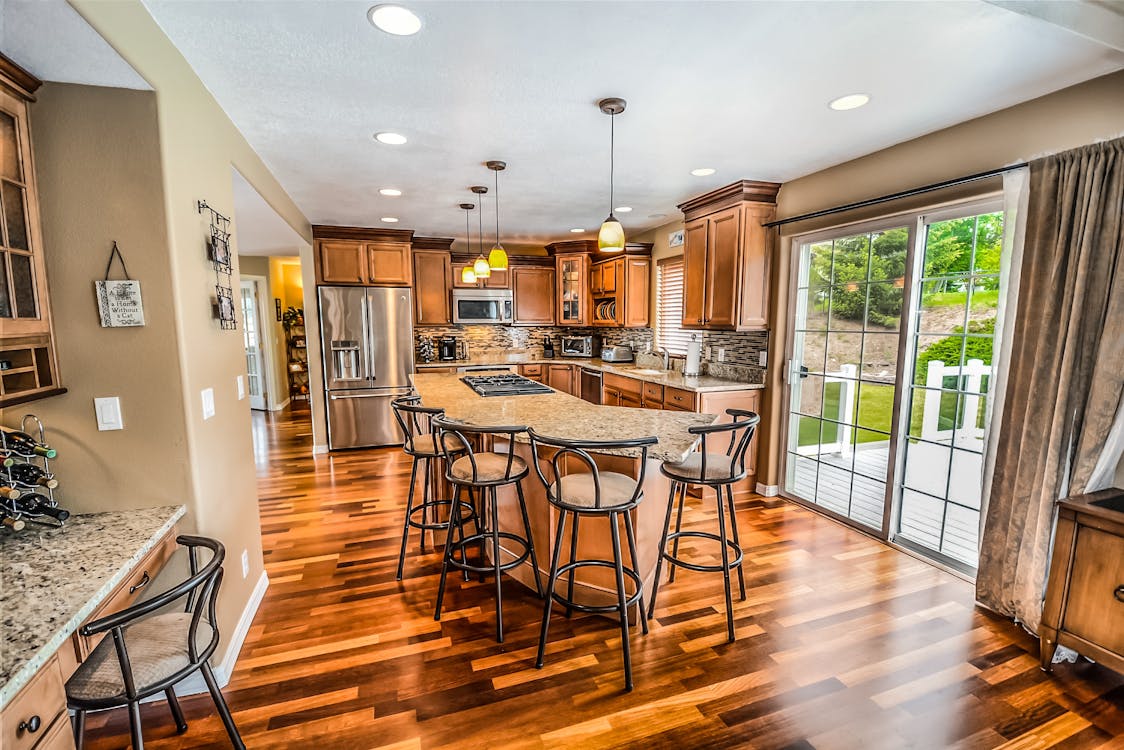
- Professional HDR photography and cinematic videography.
- A detailed, compelling property description.
- Targeted digital advertising campaigns on social media and real estate websites.
- Expert staging consultations to ensure your home shows at its absolute best.
Without this level of exposure, your home may sit on the market longer or fail to attract the strong offers that lead to a premium price.
Catch #3: The Negotiation Gap
This is arguably where a discount model can cost you the most. Negotiation is a complex skill that goes far beyond the initial offer price. It involves navigating inspection reports, appraisal contingencies, repair requests, and closing timelines.
Ask yourself: with a lower financial stake in the outcome or an overwhelming caseload, is a discount agent truly motivated or equipped to negotiate fiercely on your behalf? A few thousand dollars conceded on inspection repairs may not seem like much to them, but it’s your money. According to the National Association of Realtors’ 2023 Profile of Home Buyers and Sellers, agent-assisted homes sold for a median price of $405,000, while For Sale By Owner (FSBO) homes—the ultimate limited-service model—sold for a median of $310,000. While not a direct comparison, this highlights the significant value an expert brings to the table. A skilled negotiator can be the difference between a smooth closing and a deal falling apart, saving you thousands in the process.
The Atlanta Factor: Why Local Expertise is Non-Negotiable
The Atlanta real estate market is not one-size-fits-all. It’s a patchwork of unique neighborhoods, each with its own trends, pricing nuances, and buyer expectations. Selling a home near the BeltLine requires a different strategy than selling in a sought-after school district in North Fulton.
In my experience with bonnieerickson.net, successfully selling a home in any of Atlanta’s diverse property-rich cities isn’t just about listing it online. It’s about pricing it with hyper-local data, marketing its unique story to the right buyer pool, and having the professional connections and reputation to navigate deals with other top local agents.
A discount agent, who may not be based in your immediate area or possess deep local roots, might miss these critical nuances. Incorrectly pricing your home—either too high or too low—can cost you tens of thousands of dollars and valuable time on the market.
It’s Not About the Rate, It’s About Your Net: A Simple Math Problem
Let’s illustrate how a full-service approach can put more money in your pocket, even with a higher commission rate.
Consider a hypothetical home valued around $500,000.
| Scenario A: 1% Listing Model | Scenario B: Full-Service Model | |
|---|---|---|
| Marketing & Strategy | Basic marketing, less strategic pricing | Expert marketing, strategic pricing |
| Final Sale Price | $490,000 | $510,000 |
| Total Commission | 3.5% (1% list + 2.5% buy) = $17,150 | 6% (3% list + 3% buy) = $30,600 |
| Seller’s Gross Profit | $490,000 – $17,150 | $510,000 – $30,600 |
| SELLER’S NET PROCEEDS | $472,850 | $479,400 |
In this realistic scenario, the superior marketing and negotiation from the full-service expert resulted in a sale price that was just 4% higher. Yet, despite paying a higher commission, the seller who chose the full-service model walked away with $6,550 more in their pocket.
Focus on Value, Not Just Price
The “catch” of low-commission real estate models isn’t a scam or a bait-and-switch. It’s a fundamental trade-off. You trade comprehensive service, marketing muscle, and negotiation expertise for a lower fee. While that might sound appealing on the surface, this trade often leads to a lower final sale price and a more stressful, hands-on process that ultimately costs you more than you save.
Choosing a real estate agent shouldn’t be about finding the cheapest option; it should be about finding the right partner who can create the most value. A high-value expert is an investment, not an expense—an investment that should pay for itself by maximizing your final profit and protecting your interests every step of the way. When you’re ready to sell, don’t just ask what the commission is. Ask what you get for it.